
Explore the Latest NHS Jobs with Visa Sponsorship – Apply for Opportunities in the UK
Get insights into the latest NHS job opportunities with visa sponsorship in the UK. This guide covers available roles, eligibility criteria, and the application process.
Vassud
5/6/20265 min read
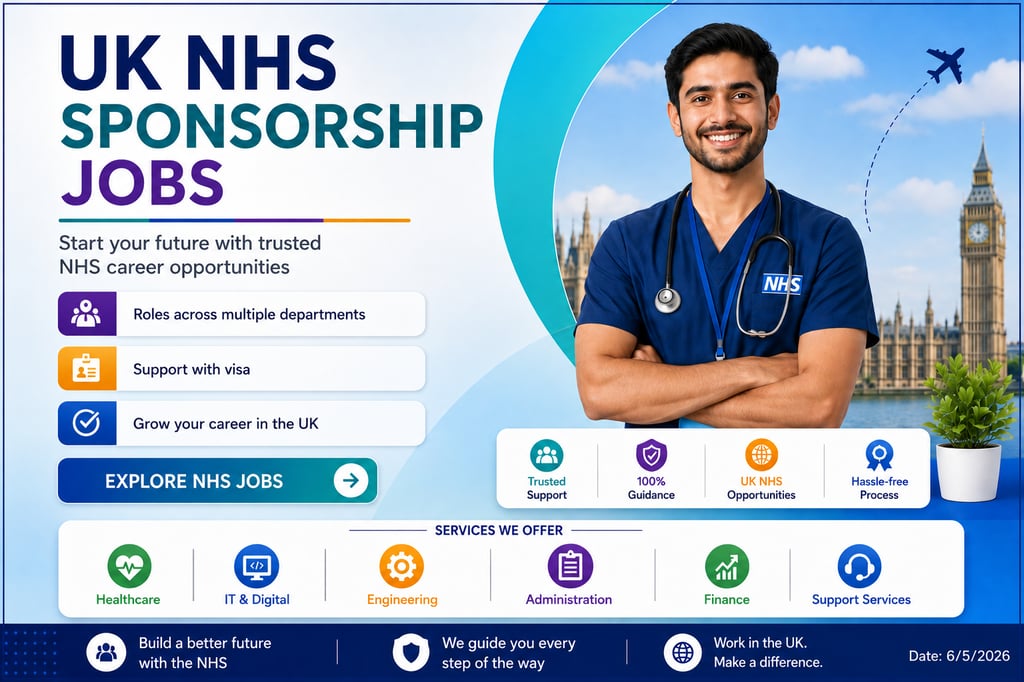
Overview of NHS Jobs with Visa Sponsorship
Introduction
Looking to begin your career with the UK’s National Health Service (NHS)? If you're searching for healthcare or technical roles in the UK, NHS jobs offering visa sponsorship could be the ideal path for you. In this blog, we’ll walk you through the available opportunities, the visa sponsorship process, and the key steps to successfully apply for NHS jobs.
What Are NHS Jobs with Visa Sponsorship?
NHS jobs with visa sponsorship are positions offered by the National Health Service where the employer helps workers secure the necessary visa to work in the UK. The Skilled Worker visa, in particular, is the most common option, allowing individuals to legally live and work in the UK. These roles are available across multiple departments such as healthcare, nursing, support services, administration, and IT/technical fields. The NHS consistently recruits skilled professionals to meet the growing demand for healthcare services across the country.
Why NHS Sponsorship Jobs Are Popular
1. Opportunity to Work Legally in the UK
One of the main advantages of NHS sponsorship jobs is that they provide a legal route to work in the UK. With sponsorship, workers can meet all legal requirements for employment and residence, making it easier to focus on their professional growth.
2. Stable and Respected Employment
The NHS is one of the largest and most respected healthcare organizations globally. Working for the NHS means stable employment, long-term job security, and being part of a prestigious institution that’s recognized worldwide.
3. Competitive Salary Structures
NHS roles offer competitive salaries, along with additional benefits such as pension schemes, paid leave, and allowances for specific roles. These structures are designed to retain skilled professionals and maintain high standards of care.
4. Career Progression Opportunities
The NHS is committed to supporting career development. With access to continuous training programs, you can enhance your skills, take on more responsibilities, and advance your career in healthcare or related fields.
5. Training and Development Support
The NHS encourages ongoing learning and professional growth. Whether you're in a clinical or technical role, the NHS offers training programs to help you stay updated on the latest practices and improve your skillset.
6. Long-Term Professional Growth
Working for the NHS not only provides immediate opportunities but also sets the foundation for long-term professional success. Many employees find themselves moving up the ranks or transitioning into different roles within the organization.
Latest NHS Job Roles with Visa Sponsorship
The NHS offers a wide range of roles with visa sponsorship, covering multiple sectors. Here are some of the latest positions available:
Clinical Jobs
IT and Digital Roles
Requirements / Eligibility
While each role may have specific requirements, there are common qualifications and expectations you should know about:
For Clinical Roles:
Relevant Degree or Qualification: Clinical roles typically require qualifications such as nursing or psychology degrees, depending on the specific position.
Professional Registration: Some healthcare positions require registration with relevant UK regulatory bodies (e.g., Nursing and Midwifery Council).
English Language Ability: Strong proficiency in English is often required, demonstrated through tests such as IELTS or the Occupational English Test (OET).
Relevant Work Experience: Work experience in healthcare settings is often preferred or required, depending on the role.
For Support Roles:
Basic Education: Basic education is often required, though some roles may require additional training.
Communication Skills: Strong verbal and written communication skills are essential for many support roles.
Care or Support Experience: Previous experience in care or customer service positions can be beneficial for roles involving patient-facing duties.
General Requirements:
Updated CV: Make sure your CV reflects your most recent qualifications and work experience.
Valid Passport: A passport is necessary for the visa application process.
References: Employers may request professional references to verify your previous work experience.
Ability to Meet UK Visa Requirements: You must meet the necessary criteria to apply for a Skilled Worker visa.
How to Apply for NHS Jobs with Visa Sponsorship in the UK
Applying for NHS jobs with visa sponsorship involves the following steps:
Step 1: Search for Relevant Vacancies
Begin by looking for job roles that match your qualifications and experience. You can find current openings on NHS job boards or other online job portals.
Step 2: Prepare a Strong CV
In the UK, a detailed and well-structured CV is critical. Make sure it includes your work history, qualifications, skills, and relevant achievements. Tailor your CV to the job description to highlight your most relevant experience.
Step 3: Create Supporting Information
Write a supporting statement or cover letter that highlights your skills, experience, and how you meet the job's requirements. Be specific and provide examples from your previous roles that align with the job description.
Step 4: Complete the Application Form Carefully
Fill out the online application form thoroughly and ensure that all information provided is accurate. Double-check for any gaps or discrepancies between your CV and application details.
Step 5: Submit Applications
Ensure you submit your application before the deadline, and make sure all the required fields and documents are included.
Tips to Get Selected Faster
1.Tailor Your CV to the Job Description
Customize your CV to reflect the specific skills and experiences needed for each job role. A tailored CV will show that you have put thought into your application and that you’re the best fit for the role.
2.Write Clear Supporting Information
Be clear and specific in your supporting statement, demonstrating how your background meets the essential and desirable criteria of the job.
3.Ensure No Unexplained Gaps in Employment
If there are gaps in your employment history, explain them professionally. Being transparent will help avoid any concerns during the shortlisting process.
4.Include Professional References
Provide valid references from previous employers who can vouch for your work performance and responsibilities.
5.Complete All Application Fields Accurately
Fill out every section of the application form accurately to avoid mistakes or incomplete submissions, which may lead to your application being overlooked.
Common Mistakes to Avoid
1.Applying Without Checking Eligibility
Always ensure you meet the job’s requirements and the visa criteria before applying.
2.Sending the Same CV to Every Role
Tailoring your CV for each job application increases your chances of success. Avoid using a generic CV for every role.
3.Missing Application Deadlines
Keep track of deadlines to ensure your application is submitted on time.
4.Ignoring Sponsorship Details
Make sure you understand the sponsorship process and provide any necessary documents requested by the employer.
5.Applying for Unrelated Roles
Focus on roles that align with your skills and qualifications. Applying for jobs outside your expertise can reduce your chances of success.
6.Incomplete Application Forms
Ensure that you fill out every section of the application form completely and accurately to avoid rejection.
FAQs
1.What is the most important part of an NHS job application?
The supporting information section is crucial. It’s your chance to show how your experience and qualifications match the job description.
2.Do I need a UK-style CV for NHS applications?
Yes, NHS employers expect a detailed UK-style CV that highlights your experience, qualifications, and achievements.
3.What should I include in supporting information?
You should provide examples from your experience that demonstrate how you meet each of the job’s requirements.
4.Are employment gaps a problem in NHS applications?
Gaps in employment can be an issue if not explained. Ensure that any breaks in your employment are addressed clearly in your application.
5.Do I need references for NHS jobs?
Yes, most NHS jobs require professional references to verify your work history and performance.
6.Should I customize my application for each NHS job?
Yes, each application should be tailored to the specific role to demonstrate that you are the right fit for the position.
7.What happens if I don’t fill all fields in the application form?
Incomplete applications are often rejected. It’s essential to fill out all required sections of the application.
Conclusion
NHS jobs with visa sponsorship are a great way to build a career in healthcare and related fields. By preparing a strong application, avoiding common mistakes, and staying updated on job openings, you can increase your chances of success in securing a role with the NHS. Keep applying, be persistent, and start your rewarding career with one of the most respected healthcare systems in the world.
©2025 Vassud | Global Education & Career Consultancy | Study and Work Abroad with Confidence | All Rights Reserved