
H1B Visa Registrations Fall 38% in 2027 | US Tightens Immigration Rules
H1B visa registrations dropped 38% for FY2027 as the US introduces stricter immigration policies, higher employer scrutiny, and wage-focused selection rules. Learn the impact on Indian students, IT professionals, and future applicants.
Vassud
5/25/20263 min read
H1B Visa Registrations Fall 38% as US Tightens Immigration Rules
Sharp Decline in H1B Visa Registrations Signals Major Immigration Shift
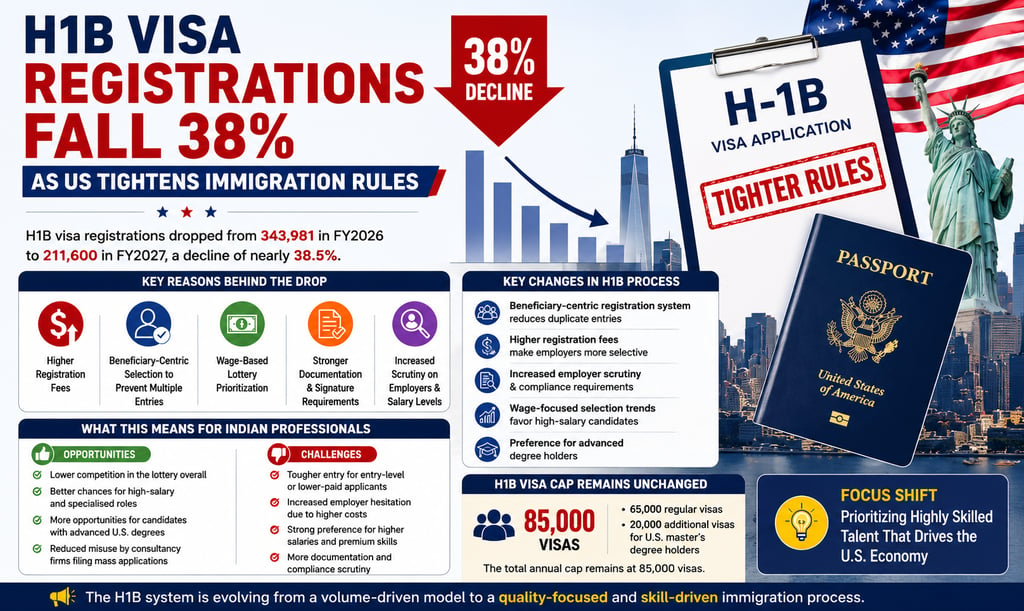
The United States has recorded a significant decline in H1B visa registrations for Fiscal Year 2027, with applications falling by nearly 38.5%. The development is being viewed as one of the biggest transformations in the US employment-based immigration system in recent years.
According to data released by U.S. Citizenship and Immigration Services, total H1B registrations dropped from approximately 343,981 in FY2026 to nearly 211,600 this year. Immigration experts believe the decrease reflects stricter compliance rules, anti-fraud measures, and a growing focus on high-skilled foreign talent.
The policy changes are expected to impact international students, overseas job seekers, and global technology companies, particularly in India, where the H1B visa remains a preferred route for working in the United States.
Understanding the H1B Visa Program
The H1B visa is a non-immigrant work visa that allows US employers to hire foreign professionals for specialised occupations requiring technical knowledge or advanced qualifications.
Industries that heavily depend on the H1B visa include:
Information Technology
Artificial Intelligence
Healthcare
Engineering
Finance
Research and Academia
For years, Indian professionals have represented the largest share of H1B recipients, especially within the IT and software sectors.
Why H1B Visa Registrations Fell by 38%
Stricter Anti-Abuse Regulations
One of the biggest reasons behind the decline is the US government’s effort to eliminate misuse of the H1B registration system. Authorities identified multiple cases where employers submitted duplicate registrations for the same applicant to increase lottery chances.
The updated beneficiary-centric selection process now limits duplicate entries and focuses on selecting genuine applicants.
Higher Registration Fees
US employers are also facing increased registration costs. The electronic registration fee has risen significantly, making companies more selective while sponsoring foreign workers.
Small staffing firms and consultancy-based hiring models are expected to face the greatest impact under the revised system.
Shift Toward High-Salary Candidates
The US government is increasingly prioritizing higher-paid and highly specialized professionals. Immigration experts suggest that wage-based preference systems could become more important in future H1B selections.
This benefits:
Experienced software engineers
AI specialists
Cybersecurity professionals
Healthcare experts
Applicants with US master’s degrees
However, entry-level candidates may experience greater competition.
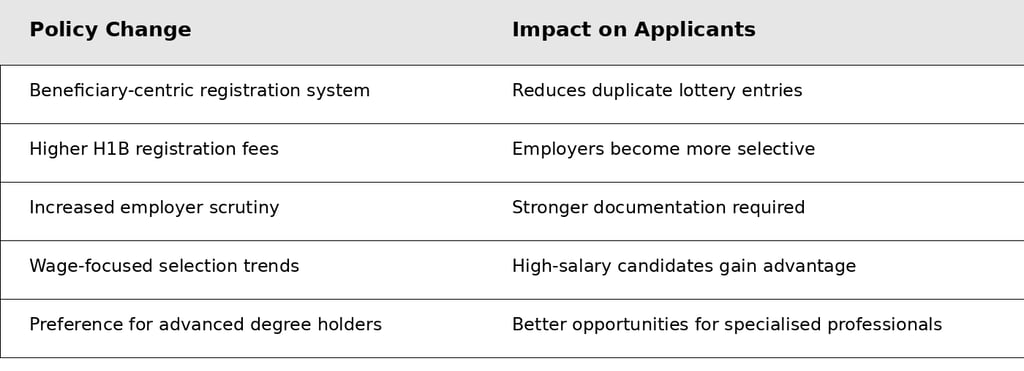
Major Changes Introduced in the H1B Selection Process
Impact on Indian Students and Professionals
Opportunities for Highly Skilled Workers
Although registrations have dropped, candidates with strong qualifications may now have improved chances of selection due to reduced competition.
Professionals with expertise in:
Artificial Intelligence
Cloud Computing
Data Science
Healthcare Technology
Advanced Software Engineering
may continue to remain in high demand across the United States.
Challenges for Fresh Graduates
International students and fresh graduates could face additional challenges because companies are becoming cautious about sponsorship expenses and compliance obligations.
Employers are now focusing more on candidates who can immediately contribute to high-value business operations.
Indian IT Sector May Need Strategic Changes
The Indian outsourcing industry has historically relied heavily on the H1B program. With tighter immigration policies, companies may increasingly:
Expand local US hiring
Build offshore remote teams
Invest in specialized talent
Reduce dependency on mass visa filings
This shift may reshape global workforce strategies over the coming years.
Increasing Focus on Economic Contribution
The updated immigration approach reflects the broader US objective of prioritizing foreign workers who contribute significantly to the economy through innovation, technical expertise, and high-income employment.
Authorities are emphasizing:
Higher prevailing wages
Specialized skill sets
Employer accountability
Stronger labor market protections
The long-term goal appears to be transforming the H1B program from a volume-based system into a quality-driven selection model.
What International Students Should Do Next
Students planning careers in the United States should focus on developing specialized and future-oriented skills.
Important Areas to Focus On
STEM-related education programs
AI and machine learning
Cybersecurity expertise
Healthcare technology
Research-based qualifications
Industry certifications
Internship experience with reputed firms
Candidates with niche expertise and advanced qualifications are likely to remain competitive despite tighter immigration rules.
Future of the H1B Visa Program
Immigration analysts believe the H1B system will continue evolving toward stricter compliance and skill-focused hiring. While the annual visa cap remains unchanged at 85,000 visas, the pathway is becoming increasingly selective.
Future policy discussions may include:
Wage-priority selection systems
Higher employer filing fees
Increased background verification
Stronger fraud prevention measures
Additional scrutiny for outsourcing firms
The United States appears determined to prioritise highly skilled professionals capable of making substantial economic contributions.
Conclusion
The 38% decline in H1B visa registrations highlights a major transition in US immigration policy. Stricter rules, higher employer costs, and stronger anti-fraud measures are reshaping how international professionals access employment opportunities in the United States.
For students and skilled workers, the changing landscape reinforces the importance of advanced education, specialised expertise, and long-term career planning. While opportunities in the US job market still exist, success will increasingly depend on high-value skills, strong qualifications, and employer demand.
As the H1B system becomes more competitive and quality-focused, professionals who adapt to these evolving expectations may continue to build successful international careers in the years ahead.
©2025 Vassud | Global Education & Career Consultancy | Study and Work Abroad with Confidence | All Rights Reserved