
How NHS Hiring Works for UK and Overseas Applicants
Understand the NHS recruitment process, from application to interview, checks, sponsorship, and joining steps for UK and overseas applicants.
Vassud
5/26/20263 min read
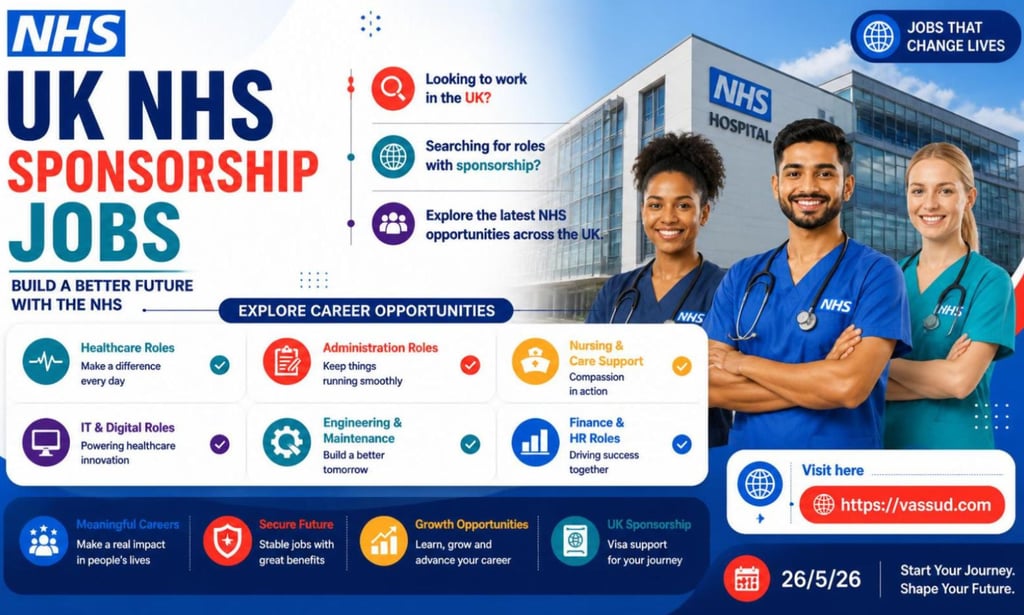
NHS Recruitment Process for UK and Overseas Applicants
The NHS recruitment process is the pathway applicants follow when applying for jobs in the National Health Service. Whether you are based in the UK or applying from overseas, understanding each stage can help you prepare better and avoid delays.
NHS jobs are popular because they offer career stability, structured pay, training opportunities, and the chance to work in one of the UK’s most respected healthcare systems. From nurses and doctors to healthcare assistants, admin staff, porters, and support workers, the NHS offers roles for many skill levels.
What Is the NHS Recruitment Process?
The NHS hiring process usually starts with an online application. Applicants search for a suitable vacancy, read the job description, and complete the required application form.
Unlike many private jobs, NHS applications often focus strongly on the supporting information section. This is where you explain how your skills, experience, and values match the person specification.
Why the NHS Hiring Process Matters
The NHS receives many applications, so employers look for clear evidence that a candidate is suitable for the role. A strong application can help you stand out, especially if you match your experience to the job requirements.
For overseas applicants, the process may include extra steps such as professional registration, English language proof, visa sponsorship checks, and document verification.
Main Stages of NHS Recruitment
1. Job Search and Application
Applicants can search for NHS vacancies by job title, location, salary band, or employer. Before applying, read the duties, person specification, closing date, and sponsorship details carefully.
2. Shortlisting
After the closing date, the recruitment team reviews applications. Candidates who meet the essential criteria are more likely to be shortlisted for the next stage.
3. Interview
NHS interviews often include questions about teamwork, communication, patient care, problem-solving, and NHS values. Clinical roles may also include scenario-based questions.
4. Pre-Employment Checks
Successful candidates usually complete checks before starting work. These may include identity checks, references, right-to-work checks, occupational health clearance, and DBS checks.
5. Offer and Start Date
Once checks are complete, the employer confirms the final offer and start date. For international applicants, this stage may also include visa sponsorship and relocation preparation.
NHS Recruitment for Overseas Applicants
International candidates can apply for NHS jobs if they meet the role requirements. Clinical applicants may need registration with bodies such as the NMC, GMC, or HCPC, depending on the profession.
Some NHS jobs with visa sponsorship are available, especially in healthcare shortage areas. However, not every vacancy offers sponsorship, so overseas applicants should always check the advert before applying.
Tips to Improve Your NHS Application
Match the Person Specification
Use the person specification as your roadmap. Show clear examples of how your skills meet the essential criteria.
Write Strong Supporting Information
Avoid general statements. Use real examples from work, training, volunteering, or care experience.
Prepare Documents Early
Keep certificates, references, ID documents, registration proof, and English test results ready if needed.
NHS Clinical Jobs
👉Clinical Intelligence and Assurance Co-ordinator
👉Assistant Practitioner - Community Recovery Service Therapy
👉Resource Planner - Integrated Urgent Care
👉Specialist Clinical Pharmacist
IT and Technical Jobs
👉Information and Business Intelligence Service Manager
👉ICT Senior Database Administrator
👉Senior Workforce Intelligence Analyst
Frequently Asked Questions
Can overseas applicants apply for NHS jobs?
Yes. Overseas applicants can apply if they meet the qualifications, registration, and visa requirements.
How long does NHS recruitment take?
It can take a few weeks to several months, depending on the role, checks, and sponsorship process.
Do NHS jobs require a DBS check?
Most NHS roles require a DBS check, especially jobs involving patients or vulnerable people.
Is NHS experience required?
Not always. Many roles accept transferable skills from care, customer service, admin, or support work.
What is most important in an NHS application?
The supporting information section is very important because it shows how well you match the role.
Conclusion
The NHS recruitment process for UK and overseas applicants is clear but detailed. Success depends on choosing the right role, matching your evidence to the job criteria, preparing documents early, and showing genuine commitment to NHS values. With the right preparation, NHS careers can offer a strong and rewarding future.
©2025 Vassud | Global Education & Career Consultancy | Study and Work Abroad with Confidence | All Rights Reserved