
How to Avoid NHS Job Rejection and Improve Your Chances
Avoid common NHS job application mistakes in 2026. Learn why applications get rejected and how to improve your chances of getting shortlisted.
Vassud
5/15/20263 min read
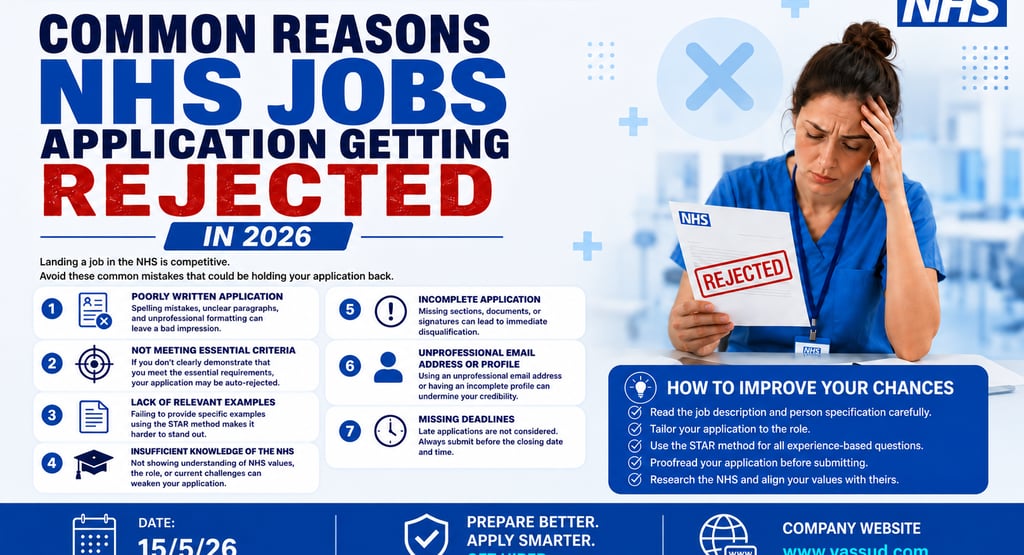
Common Reasons NHS Job Applications Get Rejected in 2026
Why Many NHS Applications Get Rejected
Many applicants dream of working in the UK healthcare sector through the NHS, but a large number of applications get rejected before even reaching the interview stage. While the demand for healthcare professionals remains high, competition is also increasing, especially for visa sponsorship roles.
Understanding why NHS applications are rejected can help candidates avoid common mistakes and improve their chances of success. Whether you are applying from India or any other country, knowing the expectations of NHS recruiters is extremely important.
This guide explains the most common reasons NHS job applications are rejected and how you can improve your application in 2026.
1. Incomplete Application Form
One of the biggest reasons for rejection is submitting incomplete information. Many candidates skip sections, provide short answers, or forget important details.
Common Mistakes
* Missing employment history
* Leaving supporting information blank
* Uploading incomplete documents
* Incorrect contact details
How to Avoid It
Before submitting, carefully review every section of your NHS application form. Make sure all required information is filled correctly.
2. Weak Supporting Information
The supporting information section is one of the most important parts of an NHS application. Many applicants write generic paragraphs that do not match the job role.
Why It Gets Rejected
* Relevant skills
* Experience related to the role
* Understanding of NHS values
* Clear communication
Tips to Improve
* Read the job description carefully
* Match your skills with the person specification
* Use examples from your experience
* Keep the writing professional and clear
3. Not Matching the Person Specification
Every NHS job posting includes essential and desirable criteria. If your profile does not meet the required qualifications or experience, the application may be rejected automatically.
Examples
* Missing required certifications
* Lack of healthcare experience
* No registration with professional bodies
* Insufficient English language skills
Solution
Apply only for roles where you meet most of the essential requirements.
4. Poor CV Formatting
A badly formatted CV creates a negative impression and makes it difficult for recruiters to review your profile.
Common Problems
* Spelling mistakes
* Unprofessional layout
* Too much unnecessary information
* Missing work dates
Best Practice
Keep your CV:
* Clear
* Professional
* Well-structured
* Easy to read
5. Applying for the Wrong Roles
Many candidates apply for highly specialized NHS jobs without having the required background.
Example
A fresher applying for a senior clinical position without experience.
Better Approach
Start with suitable entry-level or support roles if you are new to the UK healthcare system
6. Lack of NHS Knowledge
Recruiters often prefer candidates who understand NHS values and workplace culture.
Important NHS Values
* Compassion
* Respect
* Teamwork
* Patient-centered care
How to Improve
Research NHS values and mention them naturally in your application and interview responses.
7. Generic Applications Sent to Multiple Jobs
Copy-pasting the same application for every NHS role is another major mistake.
Why It Fails
Different NHS jobs require different skills and experiences.
What to Do Instead
Customize each application according to:
* Job description
* Trust requirements
* Role responsibilities
8. No Relevant Keywords
Many NHS applications are filtered digitally before recruiters review them.
Missing Keywords Can Hurt Your Chances
If the job description mentions:
* Patient care
* Clinical support
* Communication skills
Your application should naturally include similar terms where relevant.
9. Incorrect or Missing Documents
Some applications are rejected because candidates fail to upload:
* Degree certificates
* Passport copies
* English test results
* Professional registrations
Tip
Prepare all documents in advance before applying.
10. Ignoring Application Deadlines
Late applications are usually not accepted.
Recommendation
Apply early instead of waiting until the last day, especially for visa sponsorship jobs which receive high application volumes.
How to Increase Your NHS Selection Chances
Here are some quick tips to improve your success rate:
* Tailor every application
* Write strong supporting information
* Use a professional CV
* Highlight healthcare experience clearly
* Mention NHS values
* Check spelling and grammar
* Apply for suitable roles
* Prepare documents beforehand
Final Thoughts
Getting rejected from NHS jobs can feel discouraging, but most rejections happen because of avoidable mistakes. A strong application, proper preparation, and understanding of NHS expectations can significantly improve your chances.
Instead of applying randomly to multiple jobs, focus on creating quality applications that match the role requirements. With the right strategy and persistence, you can improve your opportunities to secure an NHS job in the UK in 2026.
©2025 Vassud | Global Education & Career Consultancy | Study and Work Abroad with Confidence | All Rights Reserved