
Latest NHS Careers and Sponsorship Opportunities in the UK
Explore the latest NHS career opportunities across different fields with visa sponsorship options. Move forward in your professional journey with these valuable roles.
vassud
5/14/20264 min read
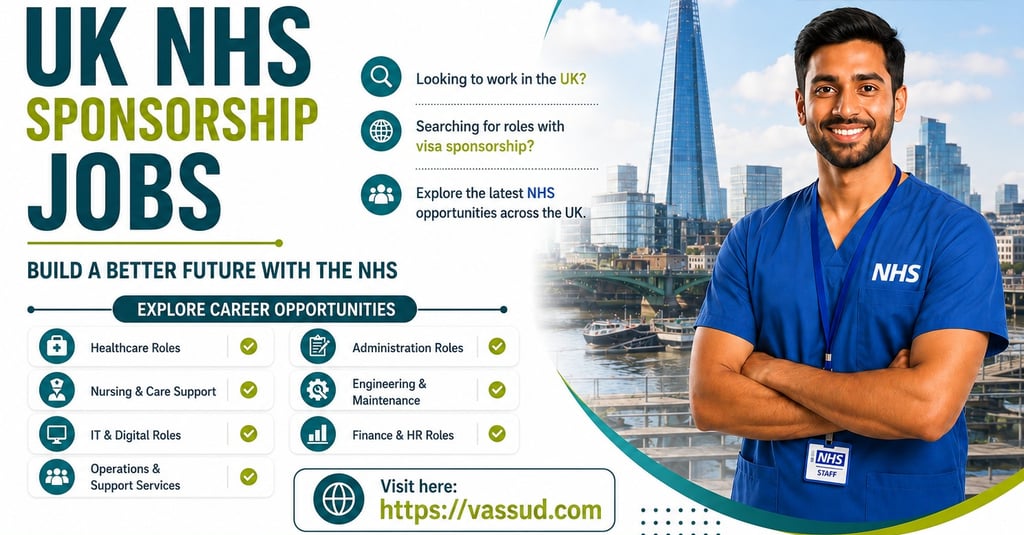

NHS Jobs with Visa Sponsorship in UK – Latest Vacancies
Introduction
Searching for NHS jobs with visa sponsorship in the UK? Many NHS trusts and healthcare organizations regularly recruit international candidates for healthcare, administration, technical, support, and IT roles with sponsorship options available. For professionals planning to build a career in the UK, NHS sponsorship jobs provide an excellent opportunity to gain stable employment, career development, and long-term professional growth. This guide explains the available NHS sponsorship opportunities, eligibility requirements, popular job roles, and the application process.
What Are NHS Jobs with Visa Sponsorship?
NHS visa sponsorship jobs are positions offered by the National Health Service where eligible international candidates can receive support for obtaining a UK Skilled Worker visa. Through sponsorship, NHS employers can hire qualified overseas applicants to legally live and work in the UK. These opportunities are available across various NHS departments including hospitals, healthcare trusts, laboratories, administration teams, and technical divisions.
Why NHS Sponsorship Jobs Are in High Demand
Many international applicants prefer NHS jobs because they offer:
Legal work opportunities in the UK
Secure and reputable employment
Competitive salary packages
Career advancement opportunities
Professional training and development
Long-term career stability
The NHS continues to experience workforce demand across multiple sectors, creating regular opportunities for skilled international professionals.
Latest NHS Job Roles with Visa Sponsorship
Here’s a list of some of the latest NHS job roles that come with visa sponsorship:
NHS Clinical Jobs
👉Senior Psychological Wellbeing practitioner
IT and Technical Jobs
👉EPR Senior Configuration Analyst
👉Data & Information Administrator
👉Senior Data Warehouse Manager
👉Specialist Information Analyst
Requirements / Eligibility
For Clinical Roles
Applicants for clinical positions may require:
Relevant academic qualifications or degree
Professional registration where applicable
Good English language proficiency
Relevant healthcare or clinical experience
For Support Roles
Support and non-clinical positions may require:
Basic educational qualifications
Good communication abilities
Previous support or care experience (preferred)
Positive attitude and willingness to learn
General Requirements
Most NHS sponsorship applications commonly require:
Updated professional CV
Valid passport
Employment references if requested
Eligibility to meet UK visa requirements
How to Apply for NHS Jobs with Visa Sponsorship in UK
Step 1: Search Relevant Vacancies
Identify NHS vacancies that align with your qualifications, skills, and work experience.
Step 2: Prepare a Professional CV
Create a detailed UK-style CV tailored specifically to the job role and person specification.
Step 3: Write Strong Supporting Information
Prepare supporting information that clearly explains how your experience, skills, and qualifications match the essential and desirable criteria listed in the job description.
Step 4: Complete the Application Form Carefully
Fill out the NHS application form accurately, ensuring all details match your CV and supporting information without inconsistencies or missing information.
Step 5: Submit Your Application Before Deadline
Carefully review your application and submit it before the closing date along with all required documents.
Tips to Improve Your Selection Chances
1. Customize Your CV for Every Role
Avoid using a generic CV. Tailor your CV according to the specific NHS job description and requirements.
2. Focus on Supporting Information
Clearly explain how your previous experience matches each requirement mentioned in the person specification.
3. Explain Employment Gaps Professionally
If you have career breaks or employment gaps, provide proper explanations in a professional manner.
4. Add Strong Professional References
Use references from previous employers who can verify your responsibilities, performance, and work experience.
5. Double-Check Your Application
Review all sections carefully to ensure there are no incomplete fields, errors, or mismatched information.
Common Mistakes to Avoid
1. Applying Without Checking Eligibility
Applying without meeting the required qualifications, experience, or sponsorship criteria may lead to rejection.
2. Using the Same CV for Every Role
A generic CV may not match the job requirements. Always customize your CV for each application.
3. Missing Application Deadlines
Late applications are usually not accepted by NHS employers.
4. Ignoring Sponsorship Details
Always confirm whether the role offers visa sponsorship before applying.
5. Applying for Unrelated Roles
Applying for unsuitable positions can reduce your chances of shortlisting.
6. Submitting Incomplete Applications
Missing information in the application form may lead to rejection.
7. Providing Incorrect Information
Inconsistent details in your CV and application can create concerns during screening.
8. Writing Weak Supporting Information
Poor supporting information may fail to show your suitability for the role.
9. Not Matching the Person Specification
Failing to address the required criteria can reduce your selection chances.
10. Missing Required Documents
Not uploading important documents may delay or affect your application.
FAQs
1. What is the most important part of an NHS application?
Supporting information is often considered the most important section because it demonstrates how your skills and experience match the role requirements.
2. Is a UK-style CV necessary for NHS jobs?
Yes. NHS employers generally expect a detailed UK-format CV highlighting your experience, responsibilities, qualifications, and achievements.
3. What should supporting information contain?
It should explain how you meet each essential and desirable criterion using practical examples from your work experience.
4. Can employment gaps affect NHS applications?
Unexplained gaps may create concerns during shortlisting, so it is important to provide proper explanations where necessary.
5. Are references mandatory for NHS jobs?
Most NHS positions require professional references from previous employers or supervisors.
6. Should every NHS application be customized?
Yes. Tailoring each application improves your chances of meeting the specific requirements of the role.
7. What happens if the application form is incomplete?
Incomplete applications may not be considered during the recruitment process.
Conclusion
NHS jobs with visa sponsorship in the UK continue to provide valuable opportunities for international candidates across healthcare, administration, IT, technical, and support sectors. With proper preparation, a strong CV, well-written supporting information, and carefully completed applications, candidates can significantly improve their chances of securing NHS sponsorship opportunities. Stay updated with the latest vacancies, apply strategically, and continue building your pathway toward a successful career in the UK healthcare sector.
©2025 Vassud | Global Education & Career Consultancy | Study and Work Abroad with Confidence | All Rights Reserved