
NHS Salary After Tax in UK 2026 Guide
Discover real NHS take-home salary after UK tax in 2026. Compare Band 5 and Band 6 NHS pay, deductions, savings, and latest updates.
Vassud
5/18/20263 min read
NHS Salary After Tax in UK (2026 Updated Guide)
Moving to the UK for an NHS job is a dream for many international healthcare workers. But one of the biggest questions overseas nurses ask before relocating is:
“How much salary will I actually receive after UK tax deductions?”
In 2026, this question has become even more important because of rising living costs, frozen UK tax thresholds, and updated NHS pay awards. Many healthcare workers are now comparing gross salary vs actual take-home pay before accepting an NHS offer.
This guide explains the latest NHS salary after tax in the UK, recent NHS pay rise updates, and how much international nurses can realistically save every month.
The UK government confirmed a 3.6% NHS pay rise for Agenda for Change staff for the 2025–26 period. (GOV.UK)
Why NHS Take-Home Salary Matters in 2026
Many international applicants focus only on the annual salary mentioned in NHS job offers. However, the actual amount received every month is lower because of:
Income tax
National Insurance (NI)
NHS pension deductions
Student loan deductions (if applicable)
At the same time, UK income tax thresholds remain frozen, which means more workers are paying higher taxes even after modest salary increases. Financial experts in the UK describe this as “fiscal drag.” (MoneyWeek)
For overseas nurses, understanding real NHS take-home pay is now more important than ever.
Latest NHS Pay Rise Update for 2026
The NHS announced updated pay increases for healthcare staff under the Agenda for Change structure.
Key NHS Pay Updates
2025–26 NHS Pay Award
NHS staff received a 3.6% pay increase
The increase was backdated from April 2025
Applies to nurses, healthcare assistants, paramedics, and other NHS staff
(GOV.UK)
2026–27 NHS Pay Discussions
Reports and NHS salary calculators indicate an additional 3.3% uplift for many NHS bands in 2026–27. (NHS Take Home Pay Calculator)
Despite salary increases, many NHS employees say rising deductions and living costs reduce the actual benefit of pay rises. Online NHS staff discussions continue to highlight concerns about frozen tax bands and lower disposable income.
NHS Band 5 Salary After Tax in UK
Band 5 is one of the most common starting levels for international nurses joining the NHS.
Band 5 NHS Gross Salary
According to updated NHS pay estimates:
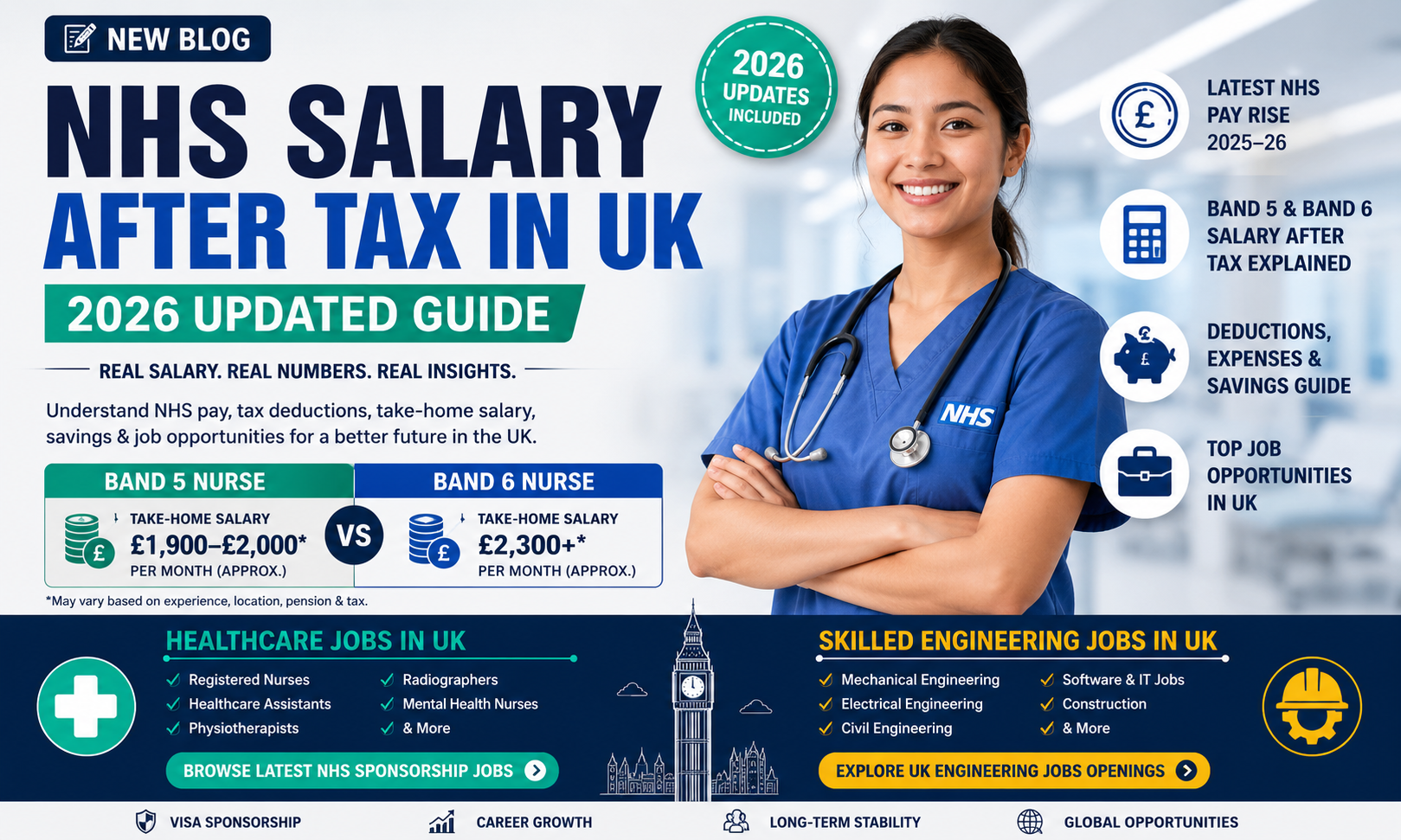
Starting Band 5 salary: approximately £31,049 yearly
Monthly take-home pay: around £1,984 after deductions
Common Deductions From Band 5 Salary
Income Tax
UK employees pay income tax once earnings cross the personal allowance threshold.
National Insurance
National Insurance contributes to UK social benefits and pension systems.
NHS Pension
Most NHS employees contribute to the NHS pension scheme automatically.
These deductions can reduce monthly salary significantly, especially for workers doing overtime or night shifts.
NHS Band 6 Salary After Tax in UK
After gaining experience, many nurses move from Band 5 to Band 6 roles.
Estimated Band 6 Salary
Updated NHS salary estimates show:
Starting Band 6 salary: approximately £38,682 yearly
Estimated monthly take-home pay: above £2,300 depending on pension and overtime
(NHS take home salary calculator)
Band 6 roles often include:
Senior staff nurse positions
Specialist nursing roles
Ward management responsibilities
Although Band 6 salaries are higher, crossing certain tax thresholds can increase deductions.
Why UK Tax Thresholds Are Important for NHS Workers
One major financial topic in the UK right now is frozen tax thresholds.
What Does “Frozen Tax Threshold” Mean?
The UK government has kept personal allowance and higher-rate tax thresholds unchanged for several years.
For NHS workers, this means:
Salary increases can push workers into higher tax brackets
More income becomes taxable
Real savings may not increase much
Recent UK financial reports show that frozen thresholds are affecting many public sector workers, including nurses and healthcare professional.
Real Monthly Expenses for International Nurses in UK
Your actual savings depend on:
City of residence
Rent
Transport
Food expenses
Family size
Average Monthly Costs in UK
Rent
Shared accommodation: £400–£800
Private apartment: £900+
Food and Groceries
Around £150–£300 monthly
Transport
£80–£250 depending on location
Healthcare workers in London generally spend much more compared to smaller UK cities.
Can International Nurses Save Money in UK?
Yes, many international nurses still save money while working in the NHS.
Savings usually improve when:
Couples share accommodation
Overtime shifts are available
Nurses move to higher NHS bands
Workers relocate outside London
However, proper budgeting is essential because living expenses and taxation continue to rise
Is NHS Salary Still Worth It in 2026?
For many healthcare professionals, the NHS still offers:
Stable employment
Visa sponsorship opportunities
Career progression
International work experience
Long-term settlement pathways
But applicants should understand the difference between gross salary and actual take-home pay before relocating.
Recent online discussions from NHS staff show that many workers feel salary growth is being offset by deductions and inflation.
Final Thoughts
NHS salaries in 2026 continue to improve gradually, but taxes and living costs remain major concerns for healthcare workers moving to the UK.
Before accepting an NHS offer, international applicants should:
Calculate take-home salary carefully
Compare UK living costs by city
Understand NHS pension deductions
Research long-term career growth
For most international nurses, the NHS still remains one of the strongest global pathways for career development and overseas settlement — especially for those planning long-term growth in the UK healthcare system.
©2025 Vassud | Global Education & Career Consultancy | Study and Work Abroad with Confidence | All Rights Reserved