
NHS Visa Sponsorship Jobs in the UK: Start Your Career Journey Today
Learn about UK NHS visa sponsorship opportunities, including eligibility requirements, application preparation, and key steps to apply for suitable vacancies with confidence.
Vassud
5/5/20265 min read
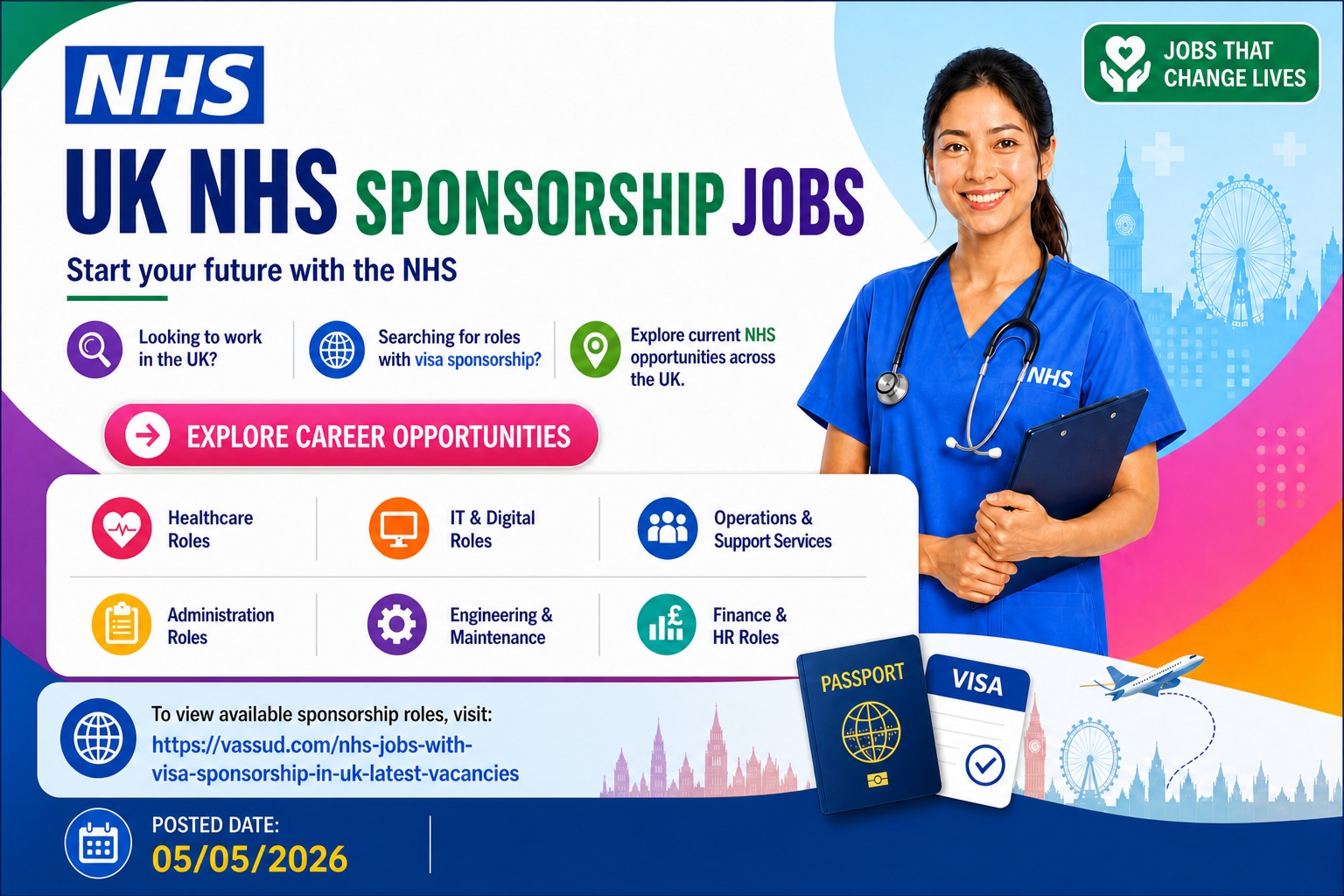
UK NHS Visa Sponsorship Jobs – Build Your Career in the UK
Introduction
Planning to work in the UK and searching for trusted job opportunities with visa sponsorship?
The NHS is one of the biggest healthcare employers in the UK, offering career options for skilled workers from different backgrounds. From patient care to office support, technology, finance, and maintenance, NHS jobs can be a valuable opportunity for people who want to start or grow their career in the UK. For international applicants, NHS visa sponsorship roles can provide a legal route to work in the UK while building experience in a respected public healthcare system.
What Are UK NHS Visa Sponsorship Jobs?
UK NHS visa sponsorship jobs are positions where an NHS employer may support eligible overseas candidates with a work visa. This usually means the employer is allowed to sponsor qualified applicants for suitable roles under the UK Skilled Worker visa route. These jobs can be available in hospitals, NHS trusts, community health services, care departments, digital teams, laboratories, administration offices, and other support units.
Why NHS Sponsorship Jobs Matter
NHS jobs are not only about getting employment. They are also about joining a service that supports millions of people every year.
These roles are useful for job seekers because they may offer:
Legal work opportunities in the UK
Career growth in a trusted organization
Experience in a professional healthcare environment
Training and skill development
A chance to work in different departments
Long-term career stability
For many applicants, the NHS can become a strong starting point for a better future in the UK.
Current NHS Job Categories to Explore
NHS vacancies are available in many areas. Depending on your background, you can search for roles that match your skills and experience.
Clinical and Healthcare Roles
IT and Digital Roles
Who Can Apply?
Eligibility depends on the job role and employer requirements. However, most applicants should be ready with:
A clear and updated CV
Relevant education or training
Experience related to the role
Good English communication skills
Valid passport
Professional registration, if needed
Employment references
Ability to meet visa requirements
For clinical or nursing jobs, extra checks, licenses, or professional registration may be required.
How to Apply for NHS Jobs with Visa Sponsorship
Step 1: Find the Right Role
Search for jobs that match your experience, qualification, and career goal.
Do not apply for every vacancy. Focus on roles where your background clearly fits the job description.
Step 2: Check Sponsorship Information
Before applying, read the vacancy details carefully.
Look for sponsorship-related words such as:
Visa sponsorship
Certificate of Sponsorship
Skilled Worker visa
Overseas applicants accepted
This helps you avoid wasting time on roles that may not support international applicants.
Step 3: Prepare a Strong CV
Your CV should be simple, clear, and focused on the job.
Include your work experience, responsibilities, achievements, education, certifications, and important skills.
Make sure the CV is easy to read and matches the role you are applying for.
Step 4: Write Supporting Information
Supporting information is very important in NHS applications.
Use this section to explain why you are suitable for the role. Match your experience with the job requirements and give real examples from your previous work.
Step 5: Submit Before the Deadline
Complete the application form carefully.
Check spelling, dates, employment history, qualifications, and contact details before submitting. Small mistakes can affect your application.
Tips to Improve Your Chances
Apply only for roles that match your skills, qualifications, and experience so your application looks relevant to the employer.
Read the person specification carefully and make sure your CV and supporting information clearly match the required criteria.
Customize your CV for each job by highlighting the most suitable experience, duties, skills, and achievements for that specific role.
Write strong supporting information with clear examples that show how your previous experience matches the job requirements.
Explain any employment gaps honestly and professionally so the employer can clearly understand your work history.
Keep your professional references ready with correct contact details, as they may be needed during the selection process.
Check application deadlines regularly and submit your form early to avoid missing good opportunities.
Apply consistently for suitable NHS roles, because regular and well-prepared applications can improve your chances of selection.
Common Mistakes to Avoid
Applying without reading the full job description can lead to a weak application because you may miss important duties, required skills, qualifications, or instructions mentioned by the employer.
Ignoring visa sponsorship details can waste your time, as not every NHS vacancy may offer sponsorship support, so it is important to check this information before applying.
Sending a general CV to every job can reduce your chances because the employer may not clearly see how your experience matches the specific position.
Writing very short supporting information can make your application look incomplete, as this section should clearly explain your skills, experience, and suitability for the job.
Leaving employment gaps without explanation can create doubts, so any breaks in your work history should be explained clearly and professionally.
Providing incorrect details such as wrong dates, contact numbers, qualifications, or work history can affect your credibility and may delay or damage your application.
Missing the closing date means you lose the opportunity completely, so it is always better to apply early instead of waiting until the last moment.
Applying for jobs that do not match your experience can make your application look unfocused, so choose positions that fit your background, skills, and career goals.
FAQs
1. Can international applicants apply for NHS jobs in the UK?
Yes, international applicants can apply for NHS jobs if they meet the role requirements and the employer is able to offer visa sponsorship.
2. Do all NHS jobs provide visa sponsorship?
No, not every NHS job offers sponsorship. You should always read the job description carefully and check whether sponsorship is available before applying.
3. Which NHS roles are commonly available with sponsorship?
Sponsorship opportunities may be available in healthcare, nursing, care support, IT, administration, finance, HR, engineering, maintenance, and other support roles, depending on employer needs.
4. Do I need experience to apply for NHS jobs?
Most NHS roles require some relevant experience, but the level of experience depends on the job. Entry-level support roles may need less experience than clinical or technical positions.
5. Is a professional registration required?
For some healthcare and nursing roles, professional registration may be required. Non-clinical roles such as IT, administration, finance, or HR may not need medical registration.
6. What should I prepare before applying?
You should prepare an updated CV, education details, work experience information, references, passport details, and strong supporting information for the application.
7. Why is supporting information important in NHS applications?
Supporting information helps the employer understand how your skills and experience match the job requirements. A clear and well-written response can improve your chances of being shortlisted.
8. Can I apply for multiple NHS jobs?
Yes, you can apply for multiple roles, but each application should be customized for the specific job. Avoid sending the same CV and same supporting information to every vacancy.
9. How can I improve my chances of selection?
Apply for roles that match your experience, read the job description carefully, write strong supporting information, keep your CV clear, and submit the application before the deadline.
10. Where can I find NHS visa sponsorship jobs?
You can search for NHS visa sponsorship jobs on NHS career websites, NHS trust pages, and trusted job portals. Always check the sponsorship details before applying.
Conclusion
UK NHS visa sponsorship jobs can be a valuable opportunity for candidates who want to work and grow in the UK. These roles are available across many areas, including healthcare, nursing, IT, administration, finance, HR, engineering, and support services. To increase your chances, focus on jobs that match your background, prepare a strong CV, write clear supporting information, and apply carefully before the deadline. With the right preparation and consistent effort, one NHS application can become the first step toward a stable and meaningful career in the UK.
©2025 Vassud | Global Education & Career Consultancy | Study and Work Abroad with Confidence | All Rights Reserved