
UK Unemployment Rises to 5% in 2026 | Latest UK Job Crisis
UK unemployment unexpectedly rises to 5% in 2026. Explore latest UK job market statistics, youth unemployment, wage growth, vacancies, and economic impact.
Vassud
5/20/20263 min read
UK Unemployment Shock 2026: Why Britain’s Job Crisis Is Getting Worse
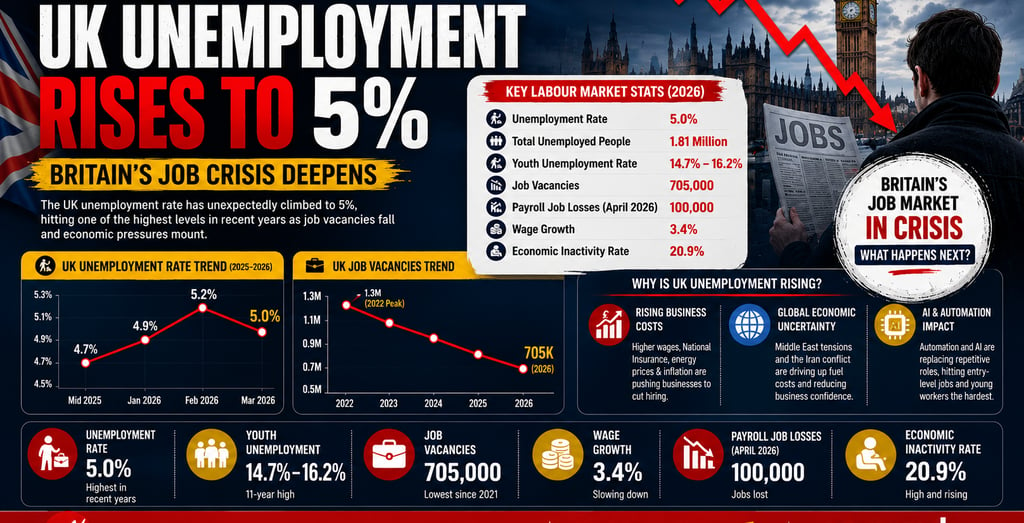
The UK labour market has entered a worrying phase in 2026 as unemployment unexpectedly climbed to 5%, raising concerns about slowing economic growth, declining hiring activity, and pressure on businesses. Economists now warn that the UK jobs market could weaken further if inflation, global conflicts, and high business costs continue through the year.
UK Unemployment Rate Hits 5% in 2026
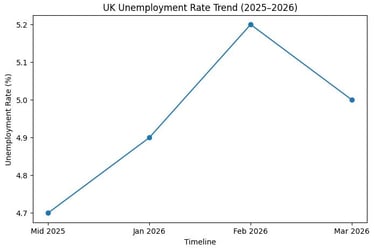
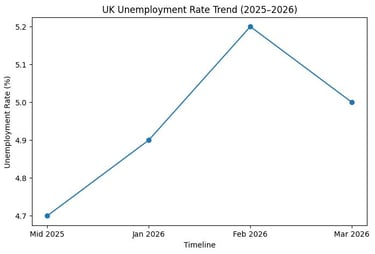
According to the latest data from the Office for National Statistics, the UK unemployment rate increased from 4.9% to 5.0% in the first quarter of 2026. This marks one of the highest unemployment levels seen in recent years.
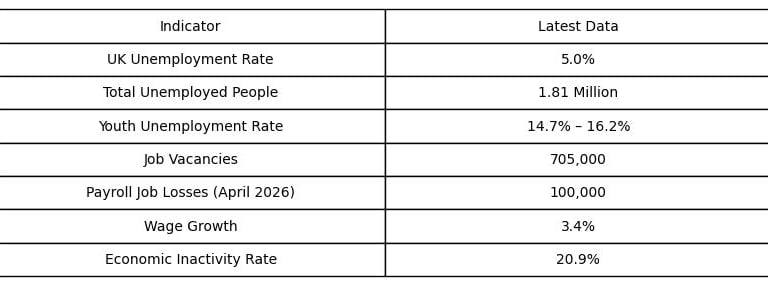
Key Labour Market Statistics (2026)
Graph: UK Unemployment Rate Trend (2025–2026)
Why Is UK Unemployment Rising in 2026?
Several major economic pressures are now affecting the UK labour market.
Rising Business Costs
Businesses across sectors like hospitality, retail, and logistics are cutting hiring because of:
Increased wage bills
Higher National Insurance contributions
Rising energy prices
Inflation pressures
Many employers are slowing recruitment or reducing staff to manage operating costs.
Global Economic Uncertainty
The ongoing Middle East tensions and the Iran conflict have pushed up fuel and energy costs globally. This has reduced business confidence and delayed investment decisions in the UK economy.
AI and Automation Impact
Reports suggest companies are increasingly reducing entry-level hiring and replacing repetitive roles with automation and AI-driven systems. Young workers are among the hardest hit groups.
Youth Unemployment in the UK Reaches 11-Year High
One of the most alarming developments is the sharp rise in unemployment among young people aged 18–24.
Youth Employment Crisis Statistic
The youth unemployment rate has climbed above 14.7%, with some reports placing it at 16.2%, the highest level in over a decade.
Experts believe reduced graduate hiring, fewer retail jobs, and automation are major reasons behind this surge.
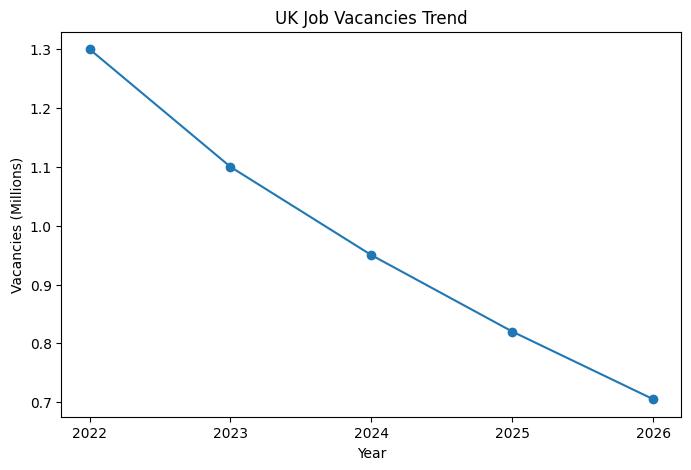
UK Job Vacancies Fall to Five-Year Low
The number of available jobs in the UK has dropped sharply.
Vacancy Market Decline
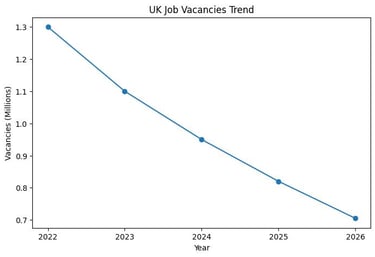
UK vacancies dropped to 705,000
Lowest level since 2021
Hiring activity slowed across hospitality, retail, and administration sectors
UK Job Vacancies
Wage Growth Is Slowing Across Britain
Although wages are still rising slightly, growth is now slowing significantly.
Latest Wage Data
Regular pay growth: 3.4%
Inflation-adjusted earnings growth: only 0.3%
Workers are experiencing weaker real income growth
This means many households are still struggling with living costs despite nominal salary increases.
What Could Happen Next in the UK Economy?
Economists expect the UK unemployment rate could rise further toward 5.5%–5.6% by 2027 if economic conditions remain weak.
Potential future risks include:
More layoffs in retail and hospitality
Reduced graduate recruitment
Continued inflation pressure
Slower economic growth
Increased automation replacing routine jobs
However, some analysts believe falling interest rates later in 2026 could help businesses recover hiring momentum.
Final Thoughts: Is the UK Heading Toward a Bigger Employment Crisis?
The unexpected rise in UK unemployment to 5% is becoming a major warning sign for the British economy. Falling vacancies, slowing wage growth, and rising youth unemployment indicate that the labor market is under growing pressure.
While the UK economy still shows some resilience, the coming months will be critical in determining whether unemployment stabilizes or moves even higher.
For job seekers, graduates, and businesses, 2026 could become one of the most challenging employment periods since the pandemic era.
©2025 Vassud | Global Education & Career Consultancy | Study and Work Abroad with Confidence | All Rights Reserved